
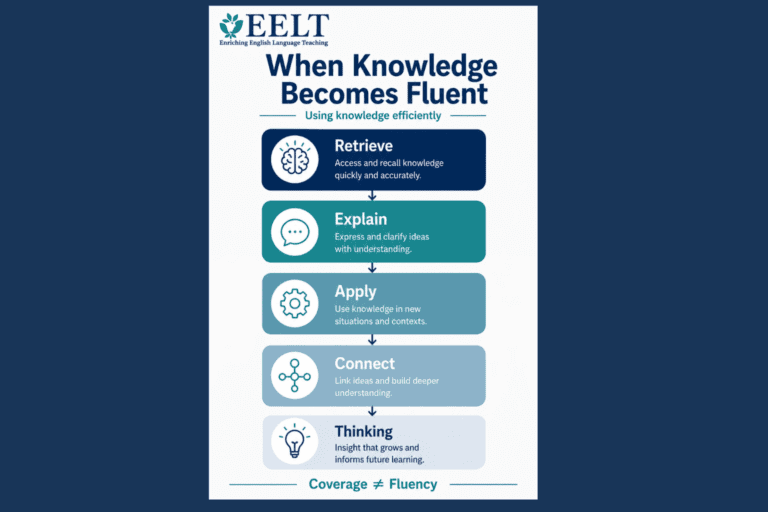
When Knowledge Becomes Fluent: Why Coverage Is Not Enough
In education, we often focus on what has been taught. Curriculum documents specify content to be covered. Schemes of work
In education, we often focus on what has been taught. Curriculum documents specify content to be covered. Schemes of work
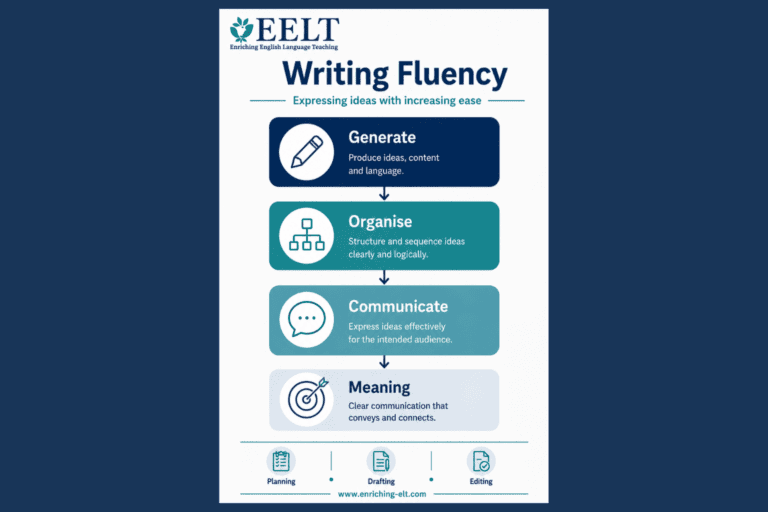
When teachers discuss writing, fluency is rarely the first concept that comes to mind. More often, discussions focus on accuracy.
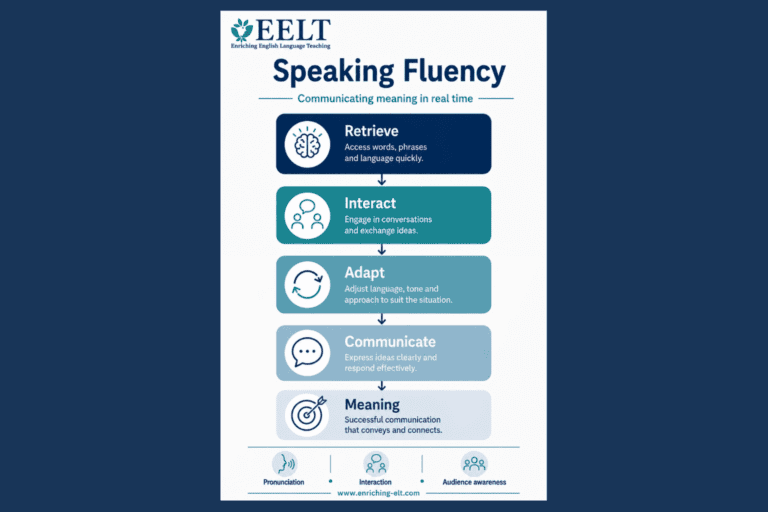
When teachers talk about fluency, they are often talking about speaking. Images of confident learners participating in conversations, responding quickly
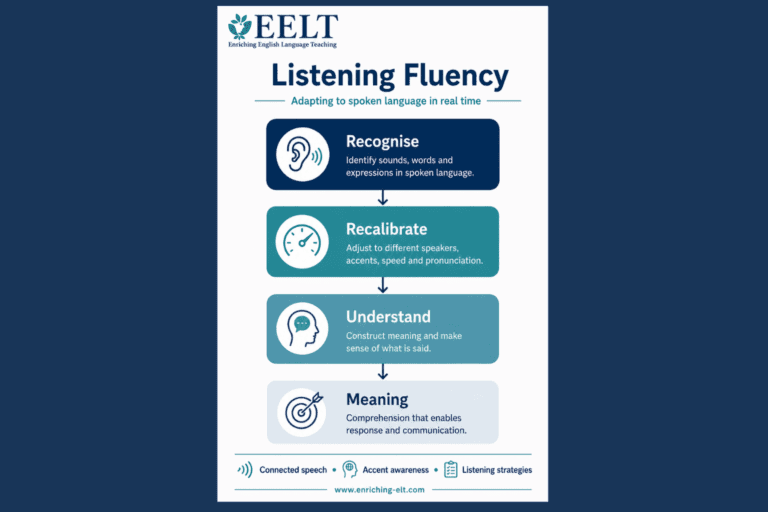
A few years ago, I was preparing a group of students for a listening examination. We had spent several lessons
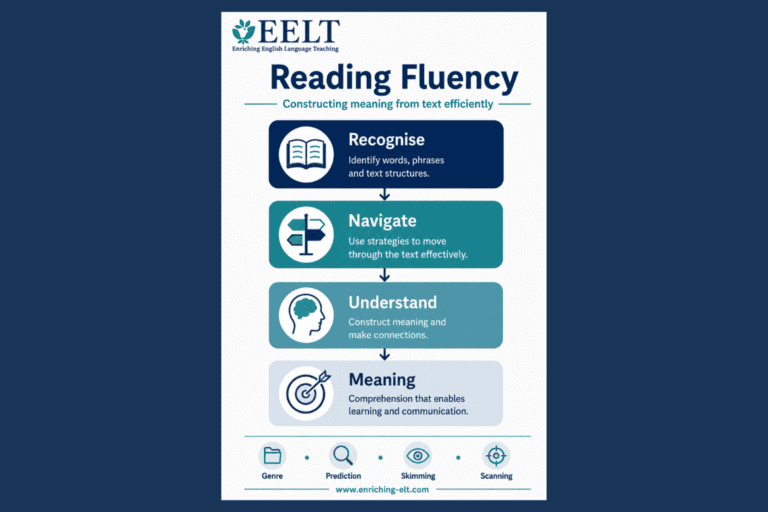
For many teachers, the term reading fluency immediately brings to mind learners reading aloud. We notice pronunciation, expression, pace and

Discover why fun is most effective as a product of purposeful learning through a memorable pronunciation lesson using Cuisenaire rods and the MMM framework.

Fluency is often misunderstood as speaking quickly or accurately. This article explores what fluency really means across listening, reading, writing and speaking, and explains how language, skills and strategies become increasingly automatic in the service of meaning.
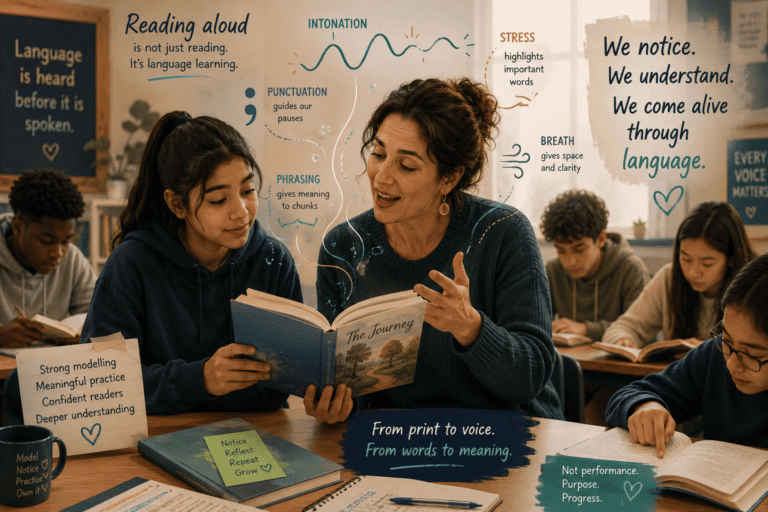
Reading aloud has long been part of classroom practice, particularly in primary education. Yet many teachers question its value, especially
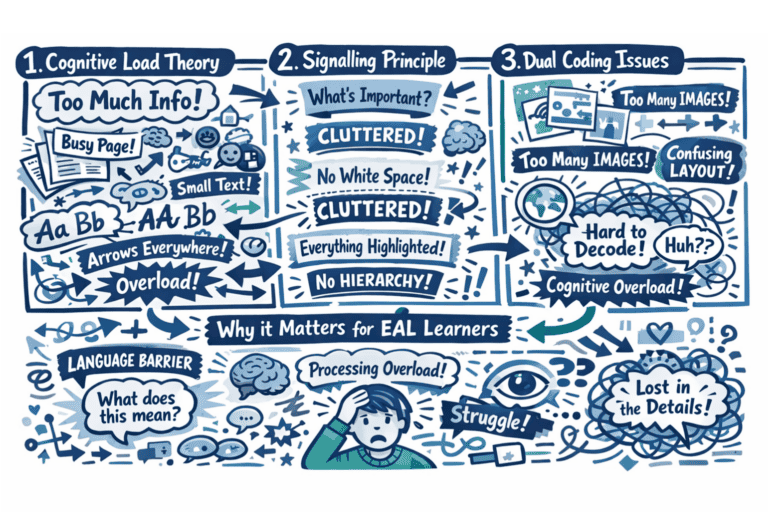
Visual design, cognitive load and EAL learners Visual learning tools have become increasingly popular in education. One approach that has
Academic language in the classroom is often assumed rather than taught. Yet words such as explain, justify and compare carry